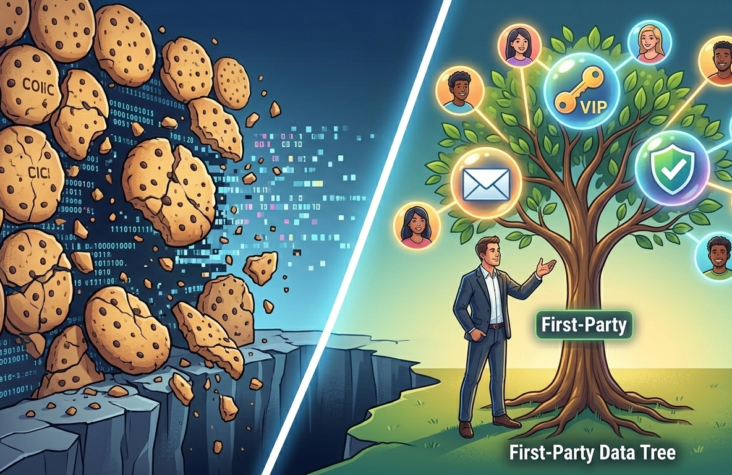
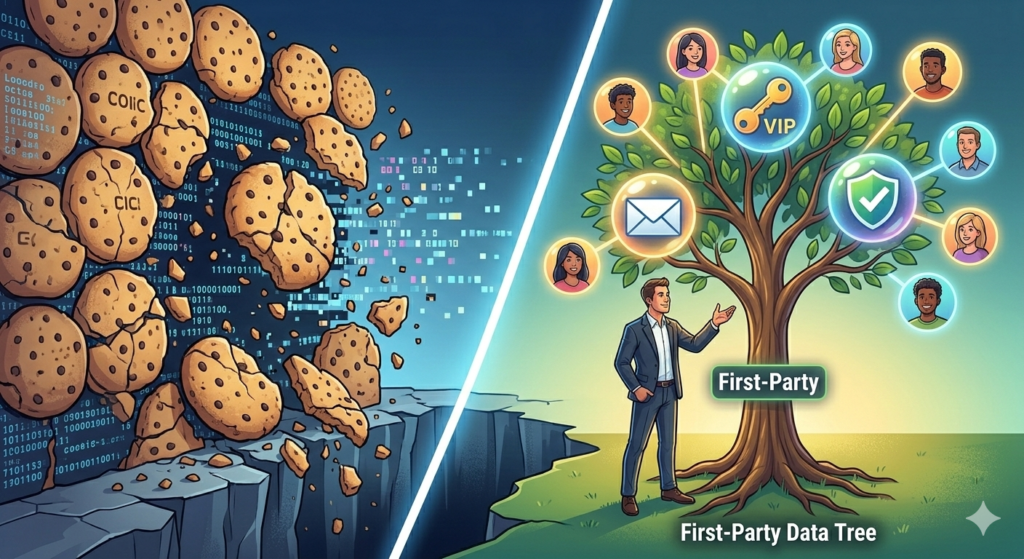
For years, digital marketers relied on a steady diet of third-party cookies to track users, build attribution models, and run hyper-targeted retargeting campaigns. In 2026, that era is officially dead.
Stricter global privacy frameworks and browser lock-downs have forced a massive pivot. If you are still relying on third-party data to fuel your paid ads, you are likely watching your Customer Acquisition Costs (CAC) skyrocket.
The Shift to Owned Audiences
The most successful brands today have stopped renting their audiences from massive tech platforms and have started owning their data. This requires a shift toward:
- First-Party Data: Information you collect directly from your audience’s interactions with your website and app.
- Zero-Party Data: Information a customer intentionally and proactively shares with you (e.g., preference center data, purchase intentions).
How to Build a “Value Exchange”
Consumers know their data is valuable, and they won’t give it up for free. You have to earn it through a consent-based value exchange. 1. Interactive Content: Ditch the boring static whitepapers. Use quizzes, embedded calculators, and interactive assessments that provide the user with personalized insights in exchange for their email address and preferences.
- Exclusive Communities: Gate your highest-value content, webinars, or community forums. If the value is high enough, users will happily trade their contact info for access.
- Loyalty and VIP Programs: Offer early access to products, specialized discounts, or bespoke email courses. Make the user feel like an insider.
The Bottom Line: Privacy-first marketing isn’t a limitation; it’s an opportunity. By building a robust first-party data ecosystem, you create a direct, unmediated relationship with your customers that no algorithm update or privacy law can take away